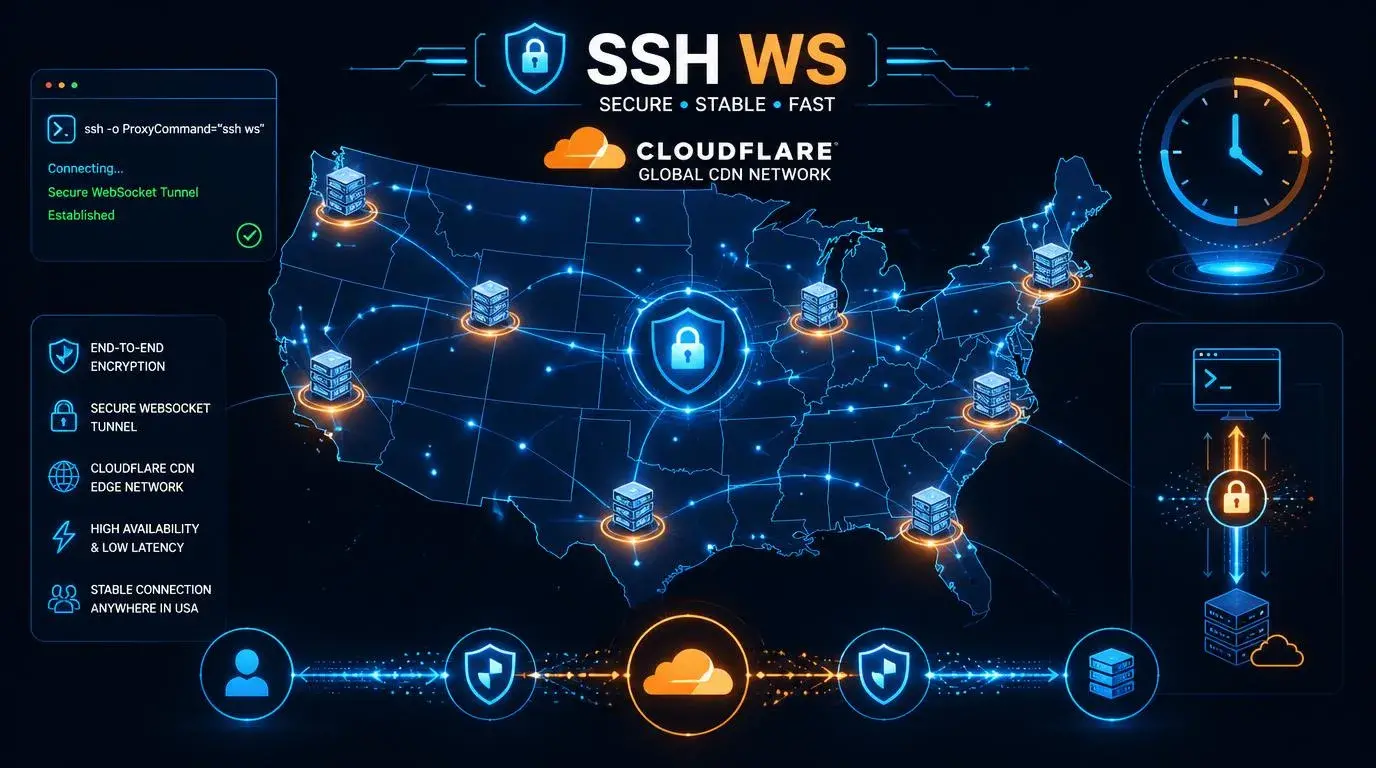
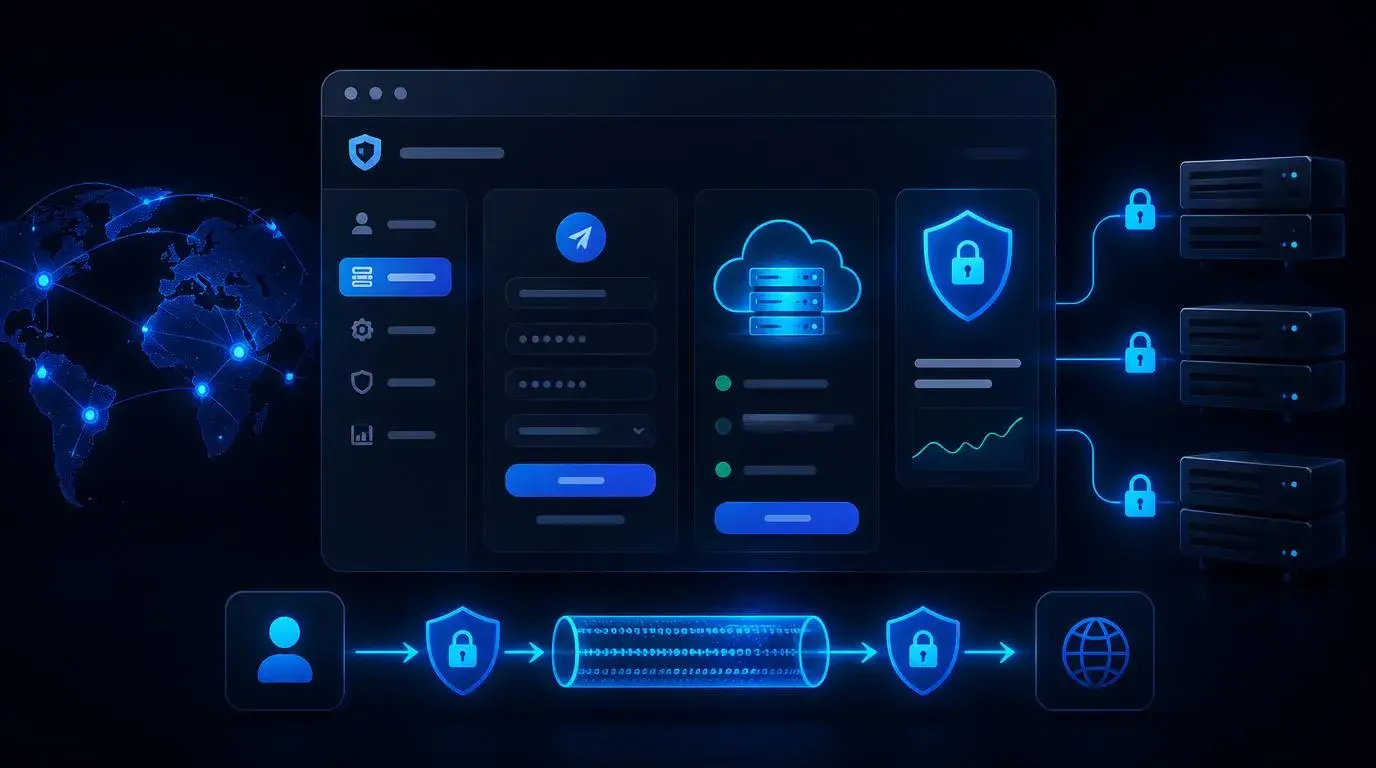
greenssh.net – Shadowsocks has been a staple in the tunneling community for years, but the newer XRay-powered Shadowsocks over WebSocket takes things to another level. It is faster, more resistant to detection, and works smoothly with CDN services like Cloudflare.
If you have been using older Shadowsocks servers and wondering what the next upgrade looks like — this is it. And yes, free accounts are readily available.
What Is XRay Shadowsocks WebSocket?
Let me untangle these terms for you.
Shadowsocks is a lightweight encrypted proxy protocol originally designed to bypass internet censorship. Unlike full VPNs, it only proxies specific traffic — making it faster and less resource-intensive.
XRay is the engine running the show. It is a next-generation proxy platform that supports multiple protocols including Shadowsocks, VMess, VLESS, and Trojan. XRay adds advanced routing, better performance, and improved security on top of base Shadowsocks.
WebSocket is the transport method. Instead of sending Shadowsocks data directly over TCP, it wraps everything in WebSocket protocol. This makes the traffic look like a persistent web connection — the kind used by chat apps, live notifications, and real-time web services.
The combination gives you: Shadowsocks encryption + XRay performance + WebSocket stealth. It is an incredibly effective setup.
Why WebSocket Transport Matters
Regular Shadowsocks over TCP works great until your network starts inspecting traffic patterns. DPI systems can identify Shadowsocks connections by their packet sizes and timing characteristics.
WebSocket changes the game. Here is why:
CDN compatibility. WebSocket connections can be routed through Cloudflare and other CDN providers. This masks your real server IP and provides global routing optimization.
Port 443 usage. WebSocket typically runs on port 443 (HTTPS), making it indistinguishable from normal secure web traffic.
Persistent connections. WebSocket maintains a long-lived connection, reducing the overhead of repeated handshakes. This improves both speed and stability.
Firewall evasion. Since WebSocket looks like regular HTTP upgrade traffic, it passes through most firewalls without issue.
How to Create Your Free Account
Step 1: Visit a provider that supports XRay Shadowsocks with WebSocket transport. Look for listings that mention “SS WebSocket” or “Shadowsocks WS”.
Step 2: Select a server location. The usual advice applies — closer is faster, but less loaded is often better than closest.
Step 3: Create your account. You will receive: server address, port, password, encryption method, WebSocket path, and optionally a CDN host for Cloudflare routing.
Step 4: Import or manually configure in your preferred app.
Best Client Apps
Android: SagerNet (archived but still works), V2RayNG (supports Shadowsocks), or Clash for Android (excellent for multi-protocol setups).
iOS: Shadowrocket handles XRay Shadowsocks WebSocket perfectly. Stash is another solid option.
Windows: Clash for Windows or v2rayN. Both support Shadowsocks over WebSocket with TLS.
macOS/Linux: ClashX or command-line xray-core for advanced users.
Configuration Example
A typical XRay Shadowsocks WebSocket config includes:
Server: ss-sg1.example.com
Port: 443
Method: aes-256-gcm or chacha20-ietf-poly1305
Password: [your-account-password]
Network: ws (WebSocket)
WebSocket Path: /ssws (or whatever path your provider specifies)
TLS: Enabled
SNI: [cdn-host] (if using Cloudflare)
In V2RayNG, you can usually import this as a share link. In Clash, it goes in the YAML config file under the proxies section.
Shadowsocks vs VMess vs VLESS — Which Should You Use?
Shadowsocks: Lightweight, proven, wide app support. Best for speed when you do not need advanced routing features. Encryption is solid but simpler than VMess.
VMess: More complex protocol with UUID authentication, multiple encryption options, and replay attack protection. Slightly more overhead but stronger security guarantees.
VLESS: The lightest protocol in the XRay ecosystem. Zero encryption overhead at the protocol level (relies entirely on TLS for security). Fastest option when used with TLS.
For most users, any of these three over WebSocket+TLS provides excellent performance and security. Shadowsocks is the easiest to set up, VMess is the most feature-rich, and VLESS is the fastest.
Performance Optimization
Choose chacha20-ietf-poly1305 on mobile. This cipher is optimized for ARM processors found in phones. It will be noticeably faster than AES on devices without hardware AES acceleration.
Choose aes-256-gcm on desktop. Modern CPUs have AES hardware acceleration (AES-NI). This makes AES ciphers faster than ChaCha on desktop platforms.
Enable TLS 1.3. Faster handshake, stronger security, smaller overhead. There is no reason not to use it if your server supports it.
Use CDN routing during peak hours. When the direct path to your server is congested, Cloudflare CDN can route around bottlenecks.
Keep the WebSocket path simple. Avoid complex paths with multiple segments. A single short path like /ssws works best.
Troubleshooting
Connection refused: Wrong port or server address. Verify the details match exactly.
Connected but extremely slow: Encryption method mismatch or server overload. Try switching between aes-256-gcm and chacha20-ietf-poly1305.
TLS handshake failed: SNI mismatch or certificate issue. Make sure TLS is enabled and the SNI host matches your CDN configuration.
Works for a few minutes then dies: WebSocket timeout. Some servers close idle connections. Enable keepalive in your client settings.
Security Notes
XRay Shadowsocks over WebSocket+TLS provides strong security:
- Traffic is encrypted at the application layer (Shadowsocks cipher)
- Transport is encrypted by TLS (prevents inspection)
- WebSocket disguise prevents protocol identification
- CDN routing hides your real server IP
For daily browsing and general privacy, this is more than sufficient. It rivals the security of paid VPN services.
Final Thoughts
XRay Shadowsocks WebSocket represents the sweet spot between simplicity and performance. It is easier to configure than VMess, faster than basic Shadowsocks over TCP, and stealthier than traditional VPN protocols.
Free accounts give you full access to this technology. Try different servers, experiment with cipher choices, and find the configuration that works best on your specific network. You might be surprised at how good a free connection can be.
Frequently Asked Questions
Is Shadowsocks still safe in 2026?
Yes, especially when paired with WebSocket+TLS transport. The combination makes it extremely resistant to detection and interception.
Can I use Shadowsocks and VPN at the same time?
You can, but it usually adds unnecessary overhead. One layer of encryption (Shadowsocks+TLS) is sufficient for most use cases.
Why choose Shadowsocks over VMess?
Shadowsocks is simpler, has wider app compatibility, and slightly less protocol overhead. VMess is better if you need UUID-based authentication or advanced features.
Does this work with Netflix?
Results vary. Shared free servers are often blocked by streaming services. Dedicated IPs (premium) work better for streaming.
How often should I change my account?
Free accounts typically expire every 3-7 days. Even if they did not, rotating accounts periodically is good practice for privacy.